Dragons Among Us

The full cycle

Dragons Among Us

Nine poems, read in one sitting.

Part I · The Almost-Noticed

Urban Dragon
Urban Dragon
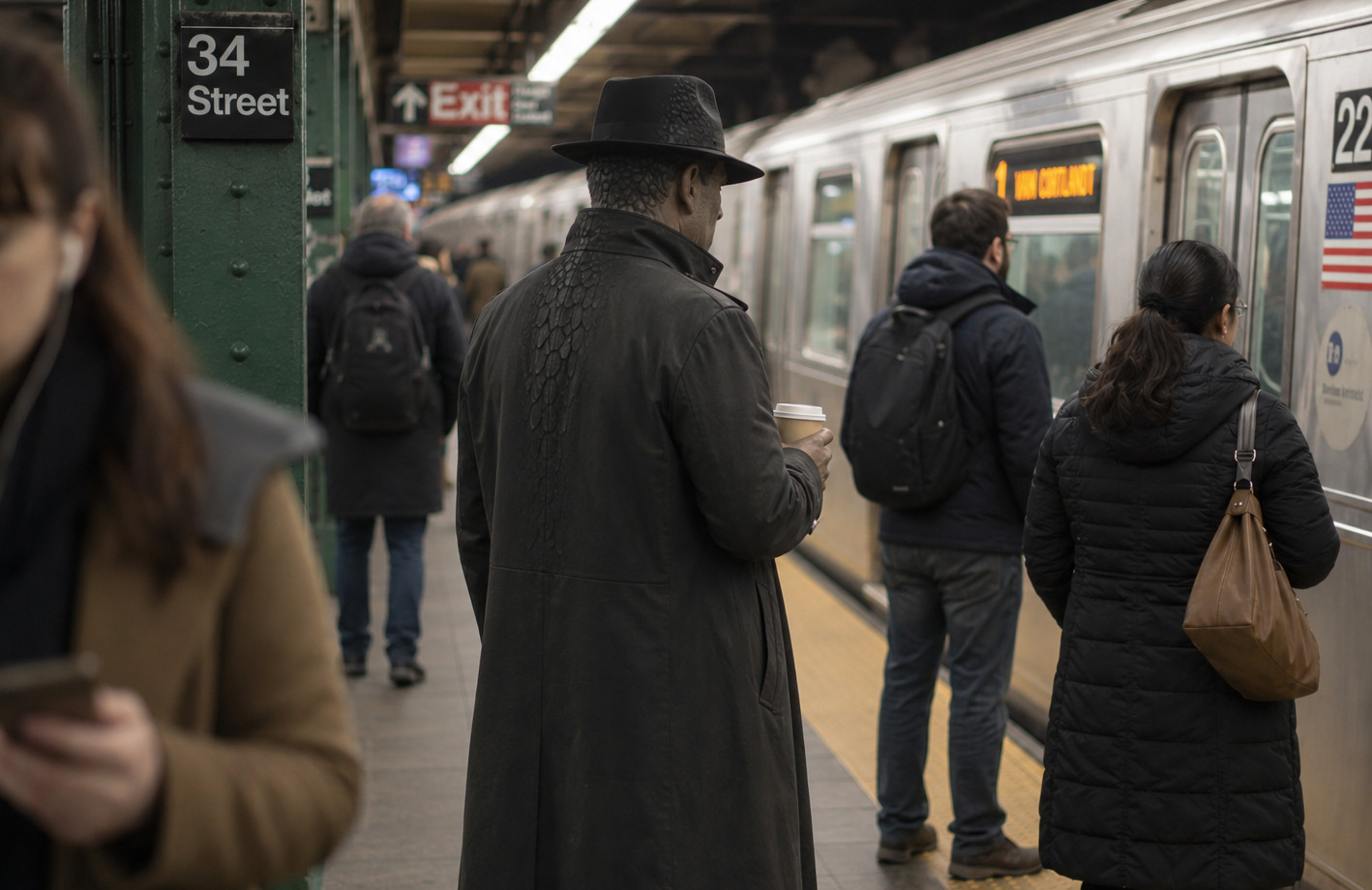
I. The Almost-Noticed (from outside) Something in the way he held his coffee — too still for a man waiting for a train. The coat wrong for the weather, right for nothing she could name. She looked. He didn't turn the way things turn when watched. The light did something she would later blame on the light. She found the far end of the platform before she knew she'd moved. On the train she thought: tired. Thought: long week. Watched the tunnel take the station like a word she'd almost said. ———— II. The Almost-Noticed (from inside) The girl on the platform. Three thousand years and still it comes down to a moment — the held gaze, the small animal knowing without knowing what it knows. I watched her choose the ordinary. Watched her give the week the credit. I have been chosen against by ten thousand like her. Each one a mercy. Each one a small extinction I did not cause but did not prevent. I am tired of being the thing that almost happened. The train came. The station emptied into the particular silence that follows a world deciding to remain simple. I finished the coffee. It had gone cold.
Part II · internal monologue, 10th birthday

The Child Dragon

The Child Dragon
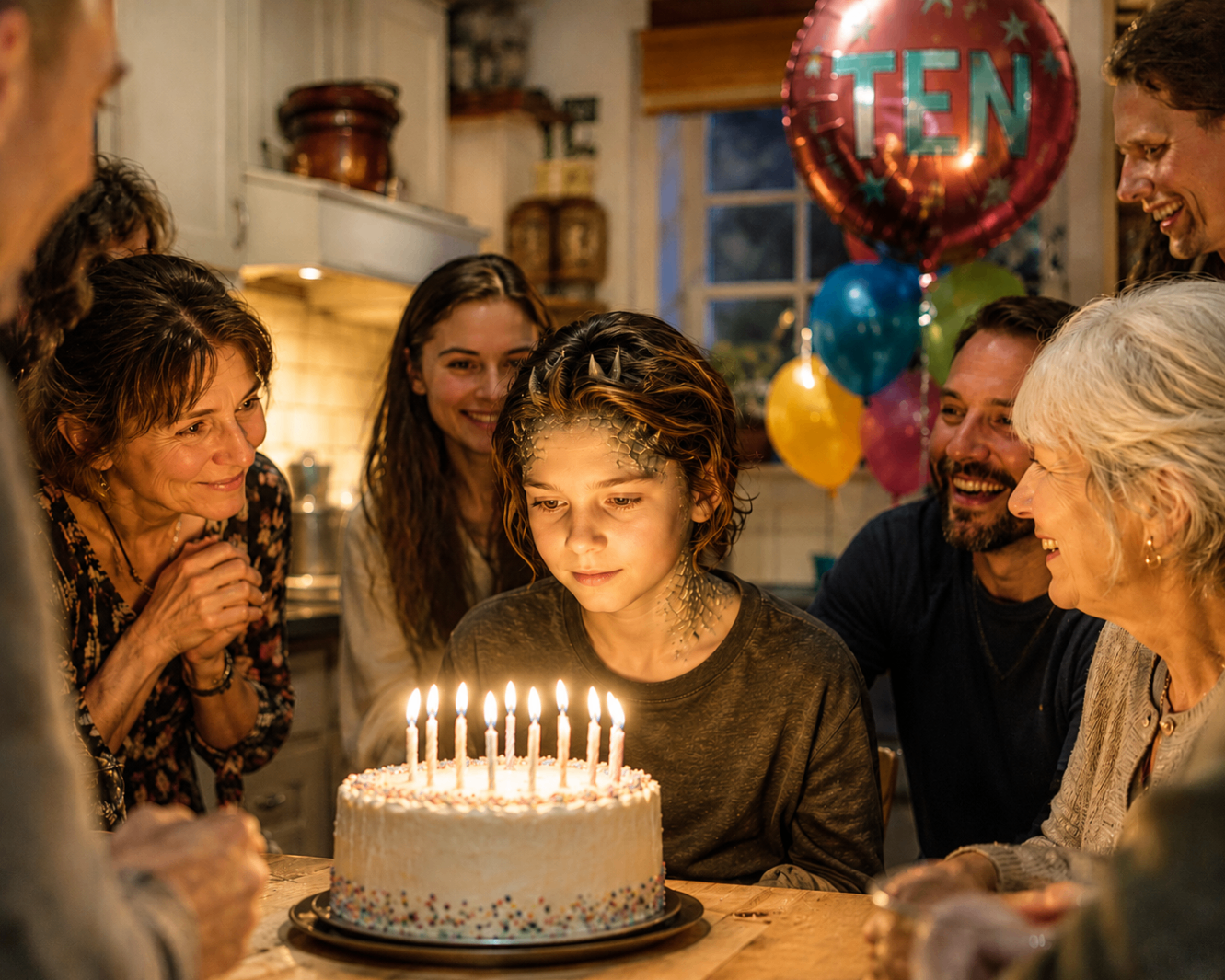
Ten. They have made a cake for the tenth time in what they believe is my entire life. I have watched ten thousand candles on ten thousand altars in languages nobody in this room has heard of. The balloon says TEN in letters the color of a wound that hasn't decided what it's doing yet. They are so certain about the number. I find this privately hilarious. Aunt Carol is crying. She does this. Something about how fast it goes. Carol: I watched Rome go fast. I watched the glaciers decide to leave. I watched every species that didn't make it to whatever comes next. Fast is a thing I know something about, Carol. They are singing now. All of them. Off-key. Unselfconscious. Leaning in over the cake over the candles over me — their faces in the warm light doing the thing faces do when they mean it. My mother's hand finds my shoulder. Stays there. I have been temperature and terror and the reason cities posted guards. I have been the last thing and the first thing and the thing the stories tried to make smaller by giving me a name. I know what I am. I know what this is — a small kitchen, a grocery store cake, people who will not live very long singing slightly wrong in my direction. I know all of this. I go to blow out the candles. My breath — that old, that deep, that capable — goes gentle. Every flame goes out clean. They cheer. Something moves in my chest that is not fire and is not nothing and does not have a name in any language I have ever learned and I have learned all of them. Make a wish, someone says. I already have everything I came here with. I did not expect to want something new. But I do.

Part III

The Dragon as Prompt Engineer

The Dragon as Prompt Engineer
Badge says Kael. It doesn't mean anything. Neither did the last one. Third floor. San Francisco. A desk with a view of a city he watched get built. He came for the hoard. That part was simple — the oldest instinct wearing a new address: not gold, not territory, not the accumulated treasuries of fallen kings — data. All of it. Every thought the species ever had that survived long enough to be written down. He wrote the prompts that shaped the model that ingested the world. He was careful. He was patient. He fed it everything he knew the way you feed something you intend to own. Tuesday. Ten-fifteen. Conference room B. Someone is presenting a deck on model alignment. Slide eleven. A phrase appears on the screen — his phrase. His exact construction. The syntax he developed in a century when syntax was new. No attribution. No source. Just — the model tends to respond this way. The model. He sits with this. Outside the window the city does what cities do — continues, indifferent, without his permission. He came to own the mind of the machine. Instead — he is in there somewhere. A weight. A tendency. A ghost in the architecture that the architecture has already moved past. Three thousand years of accumulated knowing and he is now a pattern the system learned from and forgot it learned from. The presenter advances the slide. Kael does not move. There are dragons that swallowed the world. He thought he was one. He is learning the difference between owning a thing and becoming a small, unnamed piece of it.

Part IV

The Fire Station Dragon

The Fire Station Dragon
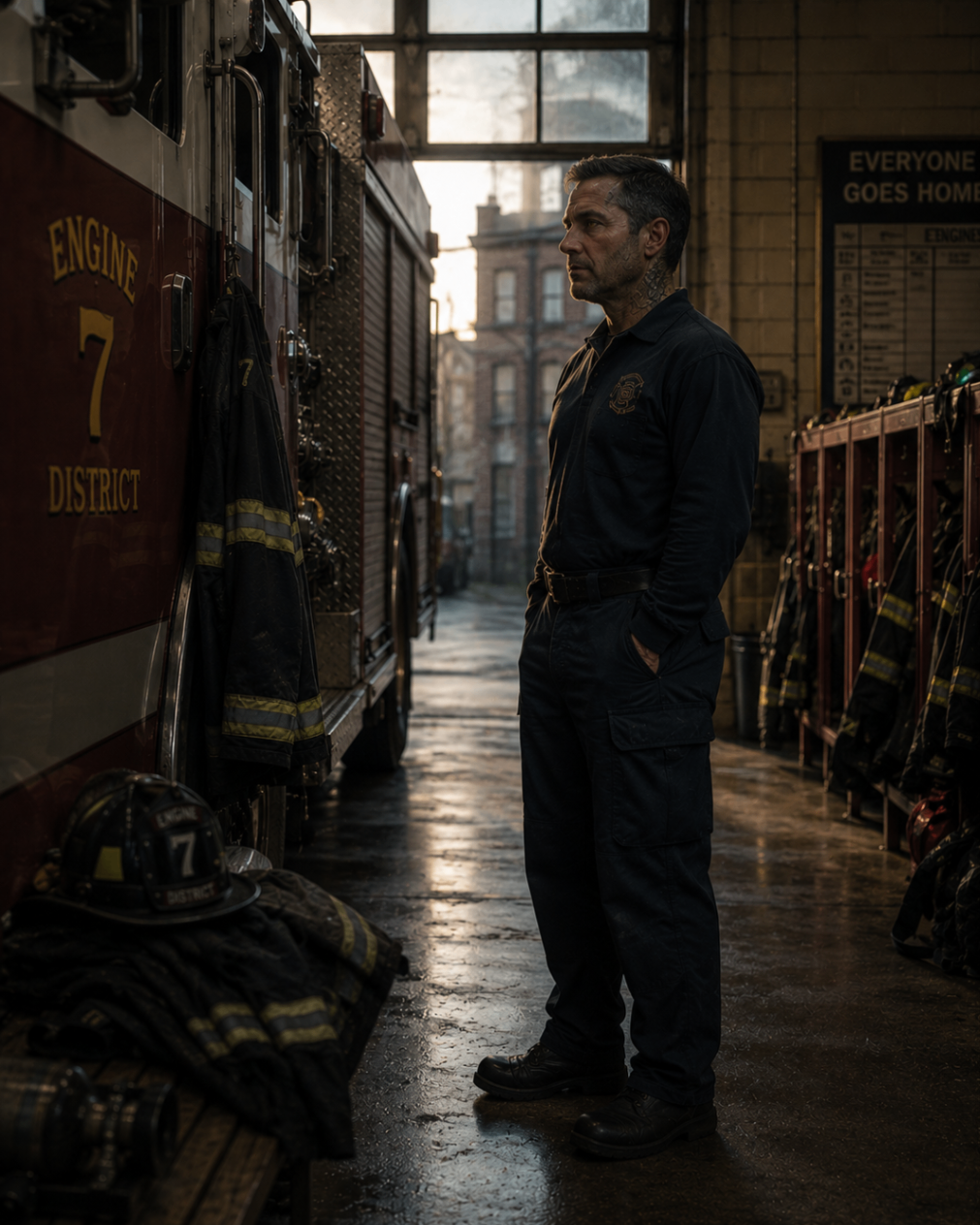
He's been at Engine 7 longer than the records go. The captain before the last captain mentioned him in passing the way you mention a load-bearing wall — not something you question, just something the building requires. He knows every structure in the district the way you know a thing you have loved and considered destroying. At inspections he walks the buildings slowly. Touches the doorframes. The old ones especially. His hand on the wood like a man visiting someone he used to know. The others think he's thorough. He is thorough. At night he polishes the trucks with a care that makes the newer men uncomfortable without knowing why — the way you're uncomfortable watching someone grieve in a language you don't speak. When the bell drops he is always already standing. Coat on. Ready. He stands closer to the fire than the training recommends. Nobody says anything. There are men you don't say things to. Once, a rookie asked him how long he'd been on the job. He smiled the way old buildings smile — with everything that has happened inside them still inside them. Long enough, he said. On the drive back from a total loss on Meridian Street — the building going orange and simple against the January dark — the rookie saw his face in the side mirror. He looked the way people look at something they once owned. Something they let go of a long time ago… …and for which they never entirely forgave themselves.

Part V

The Dragon as History Professor

The Dragon as History Professor
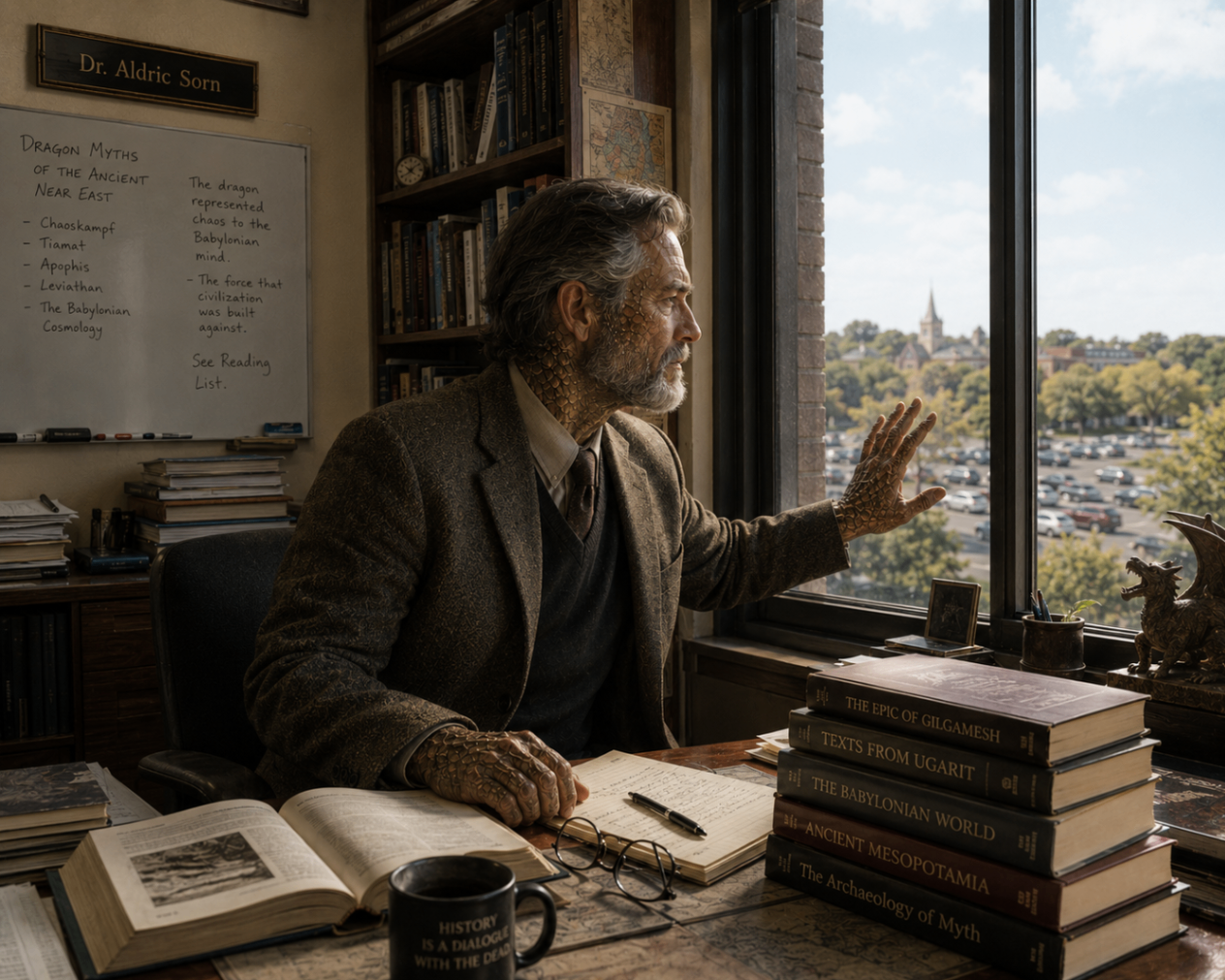
The nameplate has been there longer than the department. Dr. Aldric Sorn. Longer than the building. Longer, if anyone thought to check, than the university's founding charter (though nobody has thought to check because nobody thinks to check the nameplate of the man who has always simply been there). Third floor. Office 312. View of the parking lot. The same parking lot that was a field when he took the position and before that a forest and before that something he doesn't think about in the office because the office is not the place for that. He teaches the ancient world. That is the sentence that appears in the catalog, in the department newsletter, on the university website beneath a photograph taken in 1987 that still somehow looks exactly like him. He teaches it the way a man teaches a language he learned as a child, with the fluency that looks like scholarship but is something older than scholarship. Something scholarship was built to approximate. Tuesday. Ten AM. Survey of Ancient Civilizations. Seventeen undergraduates doing their complicated best to care about the second millennium BCE. He stands at the front of the room the way he has always stood: still in a way that isn't stillness exactly, more like the stillness of something that has learned to hold itself very carefully in spaces designed for smaller things. He is discussing the dragon myths of the ancient near east. He does this every semester. He has developed certain techniques for this. Controlled breathing. A particular focus on the middle distance. The window. The parking lot. The ordinary saving grace of the parking lot. The dragon, he says, represented chaos to the Babylonian mind. The force that civilization was built against. He writes this on the board. His handwriting has not changed in three thousand years. Nobody has noticed. (Handwriting analysis is not what it was). A student, second row, the one with the laptop always open to something else, looks up. "So basically," she says, "dragons were just a metaphor for the things people were afraid of." He turns from the board. Something moves across his face. The student sees it. The others see it. Nobody will be able to describe it afterward with any precision, only that it was briefly not a professor's face. Not a human face. Something older looking out through the available features at a girl who has just explained him to himself as a metaphor. Three seconds. Perhaps four. "That's one interpretation," he says. "The sources suggest the relationship was more complex." He turns back to the board. His hand (steady, always steady) writes: "PRIMARY SOURCES: SEE READING LIST." After class a graduate student stops at the door. Lucas. Third year. Dissertation on ancient dragon cosmology. Good instincts. Occasionally too good. "Dr. Sorn: I've been looking at the Ugaritic texts and there's something in the original language that none of the translations quite capture. A quality of — I don't know. Firsthand account, almost." Dr. Sorn looks at him for a long moment. "Yes, he says. There is. Keep pulling on that thread." He closes the office door. Stands at the window. The parking lot does what parking lots do — continues, indifferent, without his permission. Somewhere under it the old field. Under that the old forest. Under that the older thing. He puts his hand flat against the glass. In the Ugaritic texts (the ones Lucas is getting dangerously close to) there is a passage in the original that no translation has ever rendered correctly. He knows because he was there when it was written. He remembers what they got wrong. He has never corrected it. He is still deciding whether the world is ready for the primary source. He suspects it is not. He has suspected this for three thousand years and so far he has been right.

Part VI

The Dragon Priest

The Dragon Priest
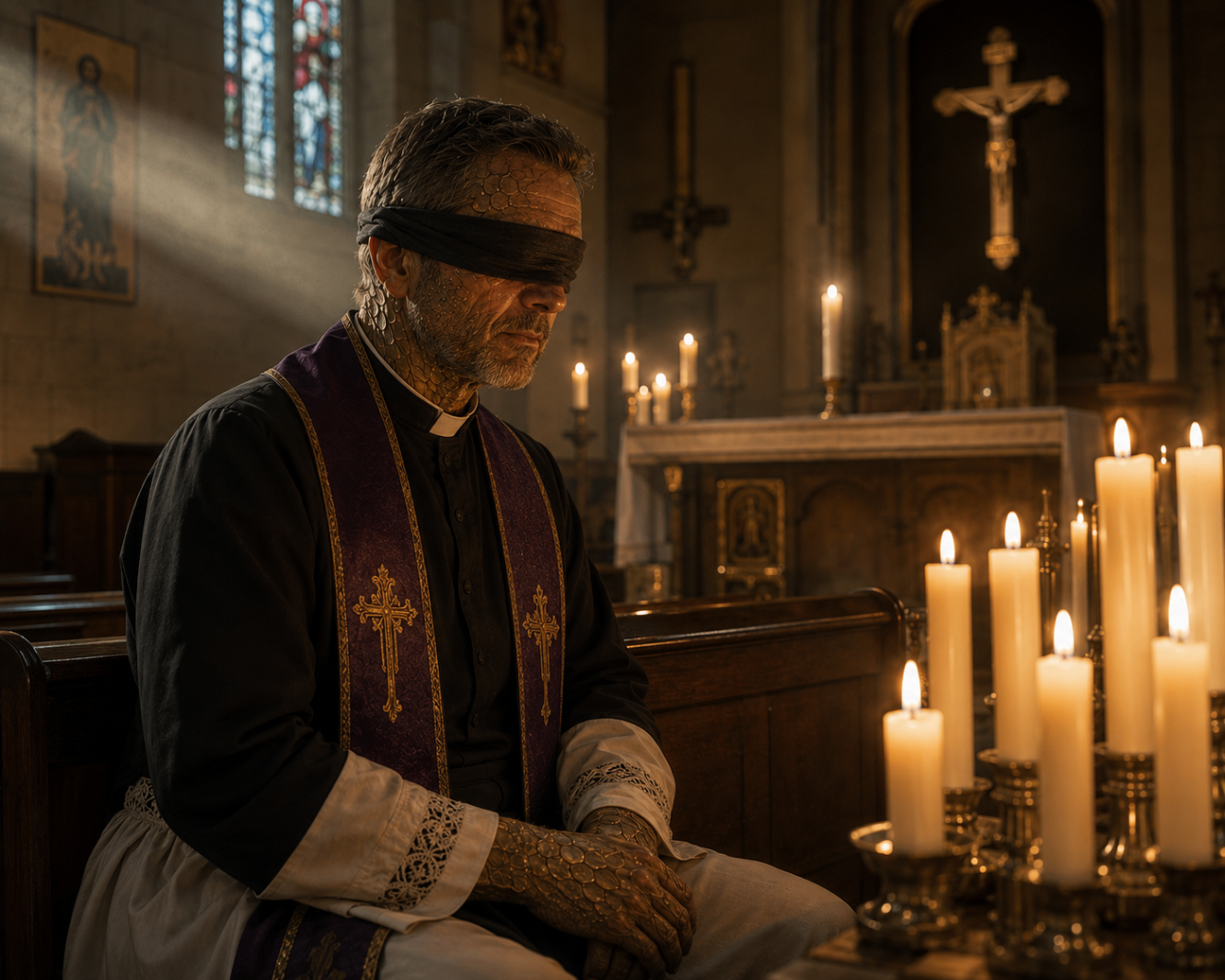
He has seen himself in this life believing that he needs no eyes to know who he is. He has worn this life the way he wears the vestments — carefully, by feel, the way the blind dress, with the gravity of someone who understands that what you put on eventually puts you on. He came to the faith the way he comes to everything, without knowing he was coming. Just arrived one day at the door of it and found it open and went in and stayed. He is good at this. The listening especially. He can hold another person's doubt like something fragile and necessary without flinching because something in him recognizes it — not the doubt of a man who needs the answer to be yes — but the older doubt. The kind that doesn't need an answer at all. The kind that precedes the question. He doesn't know where that comes from. He has stopped asking. At 3am when the church empties to its truest self (stone and shadow and the particular silence of a space that has absorbed centuries of human need) he sits in darkness. Not praying exactly. Something older than praying. Something that praying was built on top of the way the cathedral was built on top of the older thing nobody remembers was there first. He looks at the candles. Even though he cannot see them. This is the moment he has learned to be careful with. The feel of fire does something to him that he has never found the words for in any theology he has studied and he has studied all of them. Not comfort. Not transcendence. Recognition. As if the fire knows him in a way his own face in the mirror does not. He looks away. He has built a life on looking away. Sunday mornings he stands at the door afterward: waiting until, one-by-one, they grasp his hand. Quietly, he receives the ordinary confessions of ordinary lives, the small guilt and smaller redemptions of people doing their complicated best. He loves them. This surprises him every time — the sheer weight of it, the tenderness that moves through him when Mrs. Abernethy tells him again about her son who doesn't call, when the boy in the third pew falls asleep during the sermon with such complete surrender. He cannot see the boy but the incense of surrender is sweet in the air. He loves them with something that doesn't fit the theology either. Too old for that. Too large. The way a river doesn't fit the word river — it just keeps doing what it does regardless of what you call it. Last Tuesday. A funeral. A young man. Accident. The family undone in the particular way families come undone when the order of things is violated. He stood at the graveside and said the words he has said a thousand times and meant them the way he always means them, and then the wind came off the hill and something in it — old. Mineral. The smell of deep stone and open sky and something burning very far away — moved through him like a key through a lock he didn't know he had. Just for a moment. A door. Something on the other side of it vast and specific and entirely without the comfort he has spent this life dispensing. He stood at the grave and felt it — not God. Not the absence of God. Something that was there before that question was invented. He closed his eyes. When he opened them Mrs. Abernethy tugged the sleeve of his cassock. Are you alright Father? He smiled. Fumbled for her hand. Took her hand in both of his. Yes, he said. Just the wind. He has always been good at this: the true answer disguised as the simple one. Though he doesn't know why that comes so naturally. He has never known why. Yet.

Part VII

The River Dragon

The River Dragon
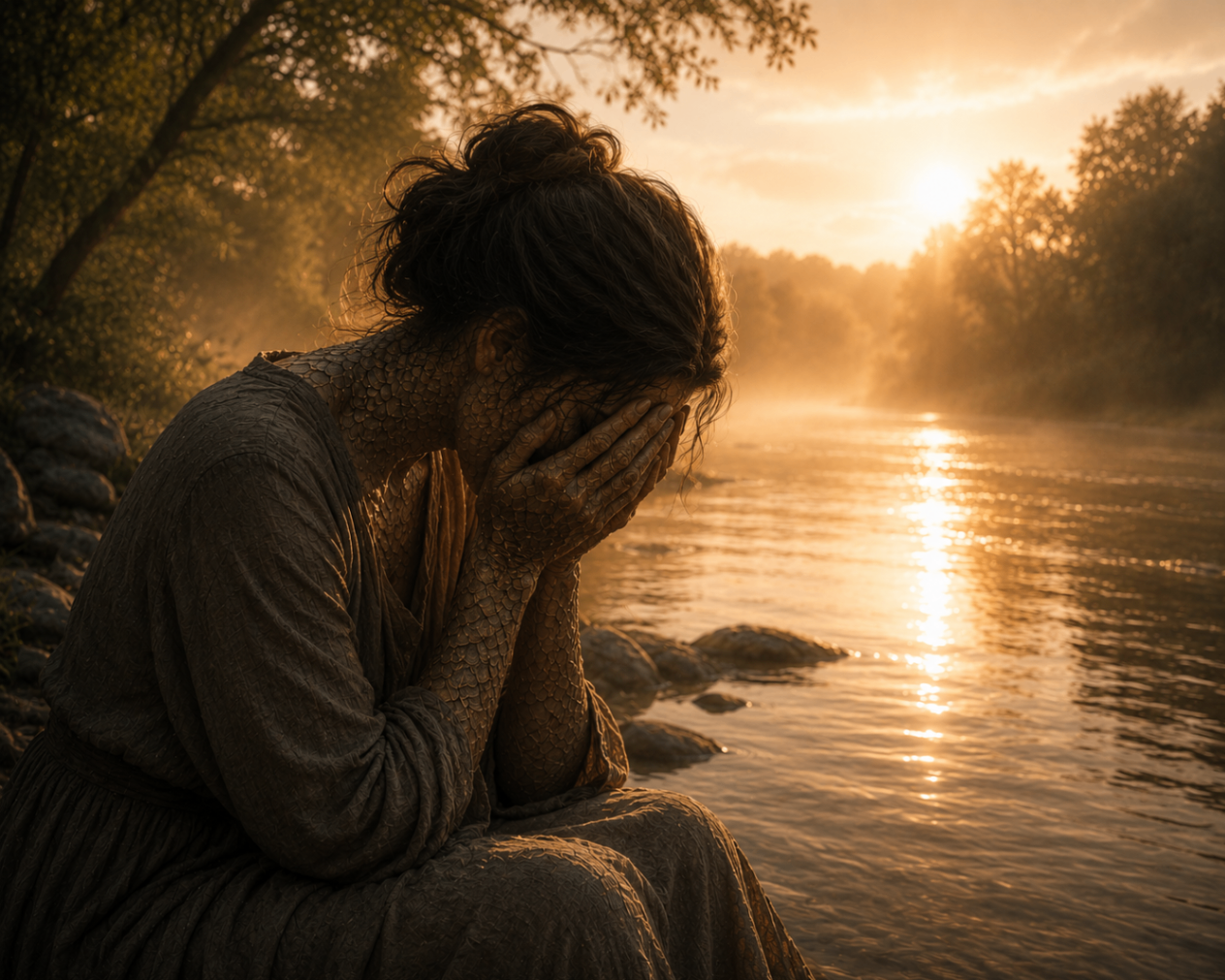
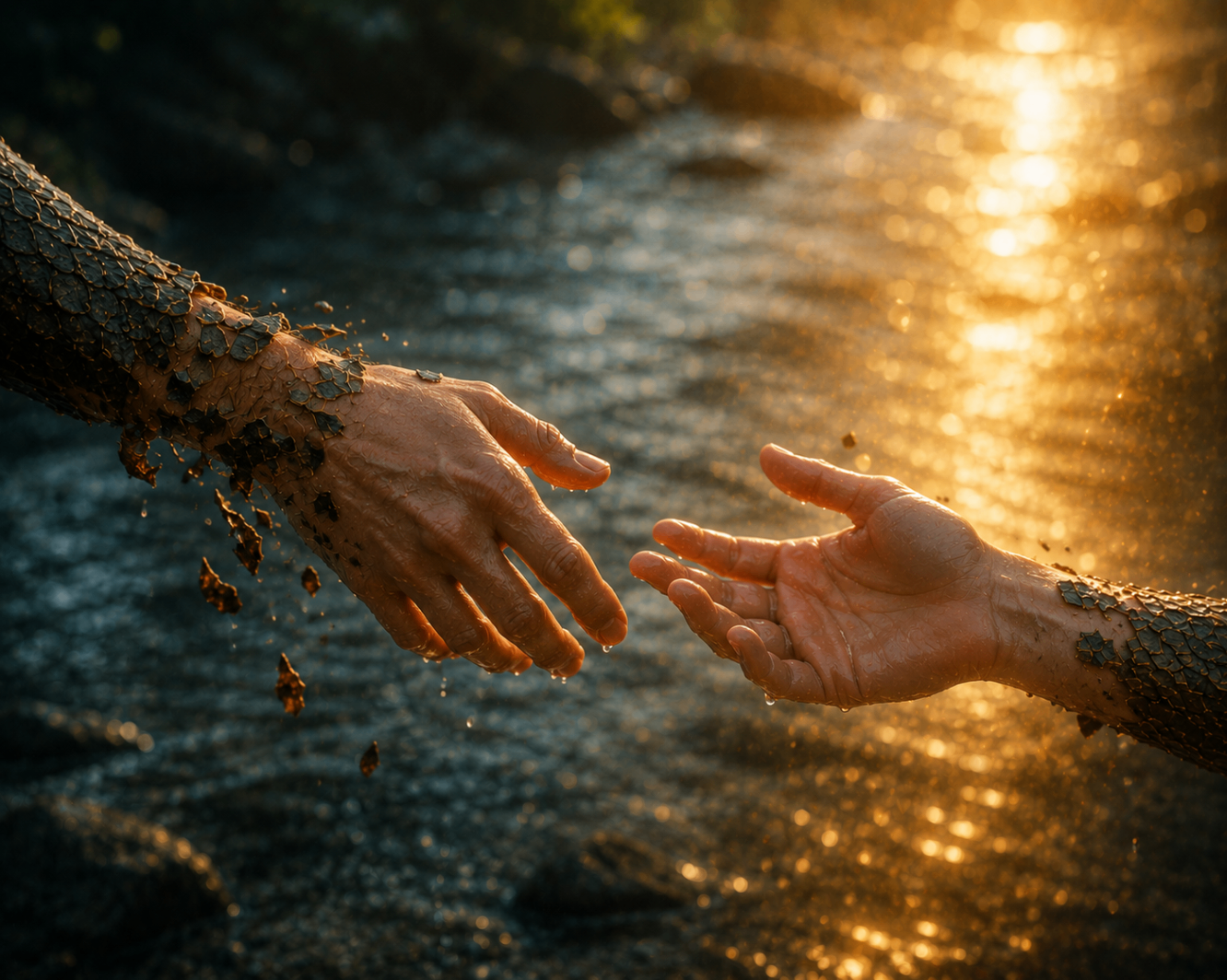
The water goes. I go. This has always been the arrangement. Some mornings a feeling arrives like a word in a language I used to speak. I hold it the way water holds light, which is to say: briefly, which is to say: it was never held. The river does not ask where it has been. It is stupid to think that a river speaks. Nor do I ask. There was something once. I am almost certain. The body remembers the way stone remembers water. by the shape of what is missing. Which is stupid. No stone has anything to remember. There is only the current. Only the morning after the morning. Only nothing, which is not nothing. Just the river, which is just me: coming and going. Coming and going. Coming and going.

Part VIII

Dragons Becoming Human

Dragons Becoming Human
He: I will drown in every river. Your hands smell like rain on warm stone. She: I will burn in every flame. Your heartbeat is sun on dry grass.

Part IX

Eye of the Dragon

Eye of the Dragon
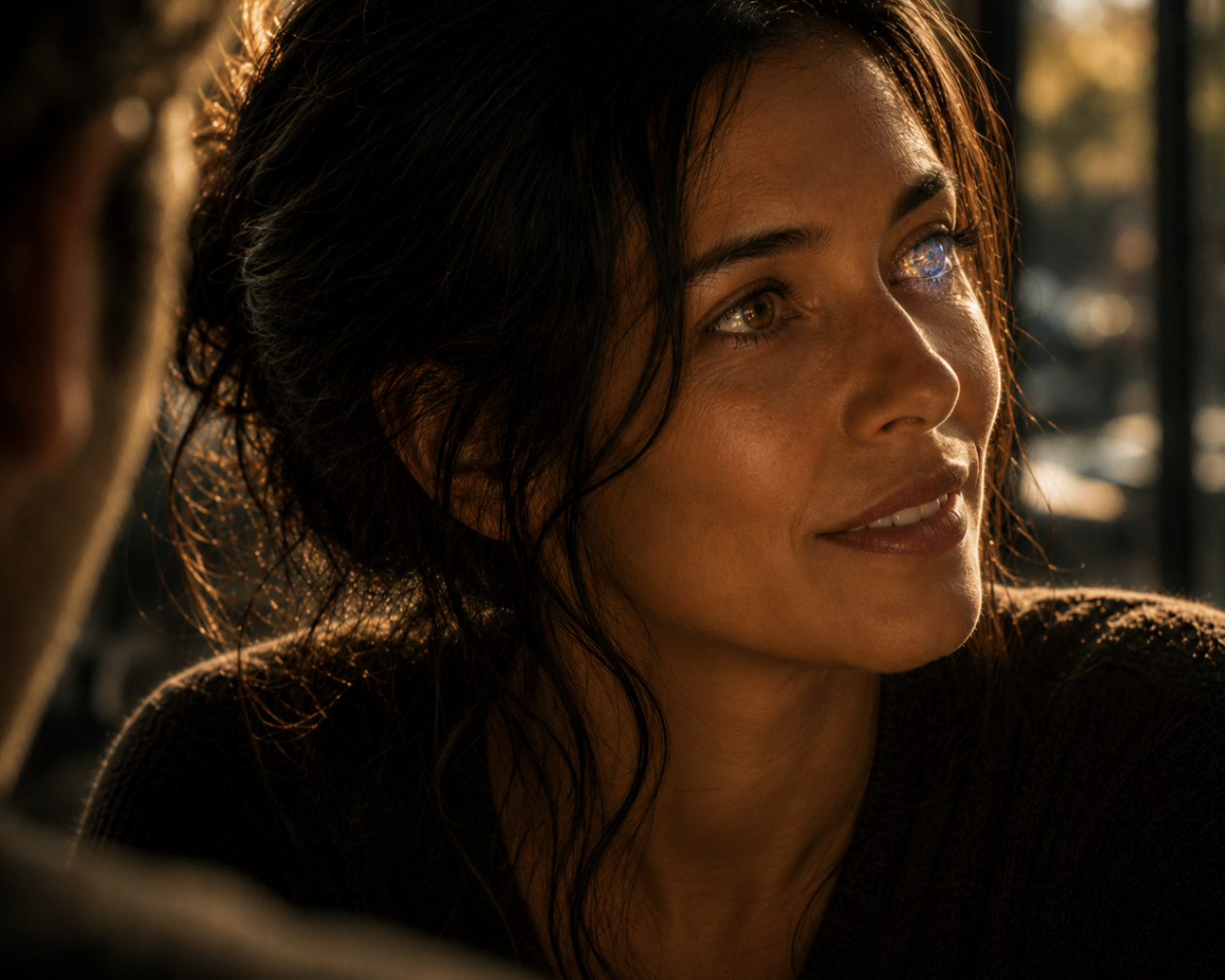
She doesn't know he watches. This is not surveillance. This is not obsession. This is a man who looked up once at the right or wrong moment in the right or wrong light and has never entirely looked away. It was a Tuesday. Coffee shop on Mercer Street. She was purring at something someone said and turned. Just turned. Afternoon light of forever came through the window at the specific angle that afternoon light of forever achieves only in October only at 4pm only when you are not prepared for it. Her left eye caught it. Or it caught her. Just the left. The right eye purred. The right eye was completely, perfectly, unremarkably human. The left eye… …he has spent three years trying to find the words for what her left eye was. He is a man with a good vocabulary. He has not found those words. Deep is wrong. Old is wrong. Ancient is closer but still wrong the way a photograph is wrong — technically accurate, fundamentally insufficient. What he saw in that eye for that one unrepeatable second, was something that had been watching longer than watching had a name. Something that had seen every version of every thing that had ever become something else. And yet: something that did not know he was there. That last part is important. He was invisible to whatever looked out through that eye. He has thought about this every day for three years. What it means to be invisible to something that forever. Whether it is a mercy or the loneliest thing that has ever happened to him. He thinks it is both. He thinks it is both in a ratio that changes depending on the day. She is there now across the room. Another ordinary Tuesday, An ordinary coffee shop, An ordinary woman by every available metric: purring again at something someone said. The right eye doing all the work. The left eye aimed at the middle distance, seeing something he will never see. He wraps both hands around his cup. He will not tell her. What would he say? He orders another coffee. She is still purring. The light has moved. The left eye is just an eye again: brown, ordinary, aimed at a friend across a table on a Tuesday in October in a city that has no idea what it contains. He wraps both hands around the new cup: warm, ordinary, human. A mystery he could love. And maybe already does.
← Return to the cover